Predicting what customers will buy sounds simple enough. Look at what sold last year, make a few adjustments, and place your orders.
Unfortunately… retail doesn’t really work like that.
Customer demand can change quickly. Seasonal trends, promotions, pricing, new products, changing shopping habits, and even the weather can all affect what ends up flying off the shelves.
That makes demand forecasting a bit of a balancing act. Order too much and you’re left with excess stock. Order too little and you could be dealing with stockouts, missed sales, and unhappy customers.
The good news is, you don’t need a crystal ball. With the right data, processes, and technology, retailers can make their forecasts more accurate and respond more quickly when demand changes.
In this guide, we’ll look at 7 practical tips for improving demand forecasting, from making better use of your data to working more closely with suppliers.
Demand forecasting is the process of predicting how much of a product customers are likely to buy over a set period.
Retailers use forecasts to make decisions about:
Historical sales data is often used as a starting point, but it’s not the whole picture. Modern forecasting can also take factors such as seasonality, promotions, price changes, and current sales patterns into account.
Poor forecasting can create problems at both ends of the stock spectrum.
Forecast too high and you could end up with excess inventory taking up valuable warehouse space. Products may eventually need to be discounted or written off.
Forecast too low and you could run into stockouts, missed sales, and frustrated customers.
Better forecasting can help retailers:
It can also help different parts of the business work from the same information. That matters because demand forecasting doesn't happen in isolation. Purchasing, merchandising, warehousing, fulfilment, and suppliers all rely on demand information to make decisions.
So, how can you improve it?
Your sales history is one of the most useful tools you have. But simply looking at last year's sales figures isn't enough.
Historical data needs context. A product might have sold particularly well because it was heavily promoted, for example. Or sales might have been lower because the product was out of stock for several weeks.
Using those figures without accounting for what actually happened can give you a misleading picture of future demand.
Start by looking at:
The closer your data is to actual customer demand, the more useful it becomes for forecasting. Modern retail forecasting systems can also adjust historical data for factors such as promotions and out-of-stock periods.
Some products sell steadily throughout the year. Others, like Christmas decorations and summer clothing, have very obvious peaks and troughs.
If you don’t account for these patterns, your forecast could be wildly optimistic in one month and completely miss the mark in another.
Look at previous seasonal trends and compare them with what’s happening now. You can then adjust your forecast based on the expected timing and size of upcoming peaks.
Seasonality is particularly important when planning inventory around major retail events and holidays. Forecasting systems can incorporate seasonal patterns alongside other demand drivers to create a more realistic picture of future sales.
A promotion can completely change the normal sales pattern of a product. A 20% discount, buy-one-get-one-free offer, or prominent in-store display could send demand through the roof.
If your forecast only looks at normal sales, it might underestimate how much stock you’ll need. On the other hand, simply assuming every promotion will create the same uplift isn’t much better.
Look at previous promotional activity and ask:
This helps you separate normal demand from promotional demand and gives your merchandising and supply chain teams a much clearer picture when planning the next campaign.
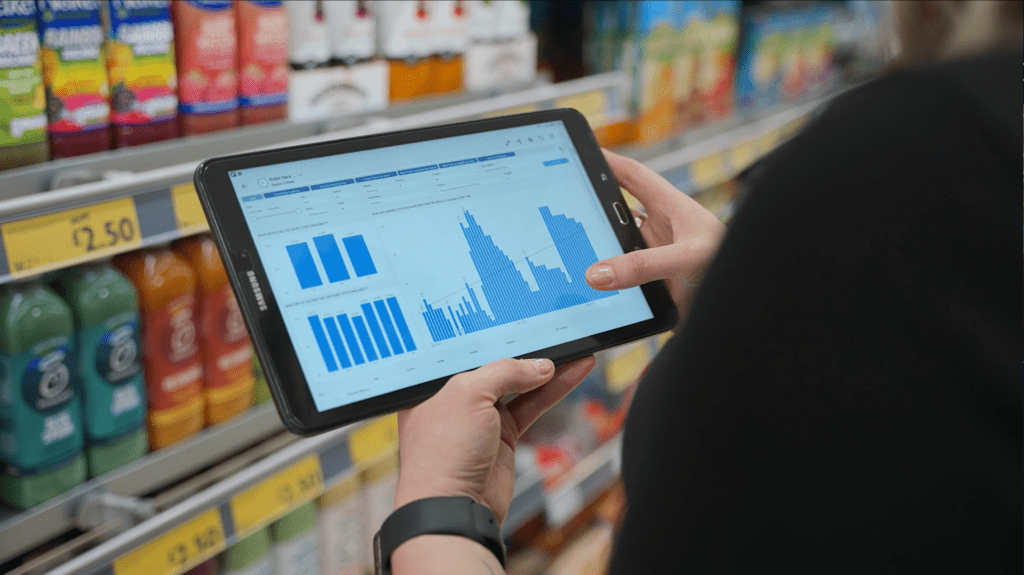
Historical data tells you what happened, but real-time data can tell you what’s happening right now. That’s particularly useful when customer demand changes quickly.
For example, if a product suddenly starts selling faster than expected, waiting for the next monthly report to spot the trend could mean you've already missed the opportunity to replenish stock.
Real-time sales and inventory data can help retailers:
This is where good retail data and analytics can make a real difference. The more current your information is, the easier it becomes to make decisions based on what's actually happening rather than what happened three months ago.
Demand forecasting shouldn’t sit with one person or department. Your sales team might know about an upcoming campaign. Your merchandising team might know that a product is being given more space in stores. Your marketing team could be planning a major launch.
Bringing these teams together creates a more complete picture and makes sure everyone is working from the same forecast.
In other words, sometimes the best way to improve a forecast is simply to get more people around the same table.
AI is making its way into just about every retail conversation at the moment, and demand forecasting is no exception.
Modern forecasting tools can analyse large volumes of data and identify patterns that might be difficult to spot manually.
They can consider factors such as:
Machine learning can also continuously analyse new information and adapt forecasts as patterns change.
But there's no need to throw every forecasting process at AI and hope for the best. The technology is only as useful as the data behind it. If your data is incomplete, inaccurate, or poorly structured, a sophisticated forecasting system won’t magically fix it. AI is another tool in the toolbox, not a replacement for good data and sound retail knowledge.
A forecast isn't finished once you've made it. You need to look back and see how close your predictions were to what actually happened.
Track metrics such as:
Then look for patterns.
Are certain products consistently being over-forecast? Are particular locations regularly running out of stock? Do promotional forecasts tend to miss the mark?
These insights can help you refine your forecasting process over time. It also means your team isn't constantly reinventing the wheel. If you understand why a forecast was wrong, you have a much better chance of getting the next one right.
Demand forecasting and inventory management go hand in hand.
If you have a clearer idea of what customers are likely to buy, you can make more informed decisions about how much stock to hold and where to put it.
That can help retailers avoid two particularly expensive problems: too much stock and not enough stock.
Better forecasting can support:
It can also make your warehousing and storage operations more efficient.
After all, there's not much point forecasting demand accurately if your warehouse then has to play Tetris with thousands of units of stock.
Good forecasting starts with good data. But turning that data into useful action requires the right processes, systems and people.
At Dee Set, we help retailers make better decisions with actionable retail data, alongside the operational support needed to keep products moving.
From retail data and analytics to warehousing and storage and order fulfilment, we help connect the dots across your retail operation. Because a good forecast is only useful if you can act on it.
Want to improve visibility across your retail operation? Get in touch with the Dee Set team today.
Every product has a journey. It might begin in a factory halfway across the world, travel through warehouses, distribution centres and stores, before finally landing in a customer's hands. That's a lot of moving parts. And every step has an impact.
Today's retailers aren't just asking, "How can we get products to customers faster?" They're also asking, "How can we do it more responsibly?"
That's where sustainable supply chain management comes in.
In this guide, we'll explain:
Let’s get into it…
Put simply, sustainable supply chain management is about reducing the environmental and social impact of your supply chain without compromising efficiency. That means thinking beyond cost and speed.
It's about how products are sourced, transported, stored and delivered. It also means considering everything from carbon emissions and packaging waste to ethical sourcing and working conditions.
Think of your supply chain like a relay race. Every runner has an important job, but if one person drops the baton, the whole team suffers. Sustainable supply chain management is about making every handover smoother, smarter, and more responsible.
Customers care more than ever about where products come from and how they're made. At the same time, businesses are facing increasing pressure from governments, investors and retailers to reduce emissions and improve transparency across their operations.
According to McKinsey, supply chains are responsible for more than 90% of many companies' greenhouse gas emissions, making them one of the biggest opportunities for businesses looking to reduce their environmental impact.
There's a commercial case too. Research from Deloitte found that organisations with more sustainable operations are often better positioned to reduce waste, improve resilience, and strengthen customer trust.
In other words, sustainability isn't just about doing the right thing. It's also about building a stronger business.
There's no single answer to this question. Instead, sustainable supply chain management brings together lots of smaller improvements that add up over time.
These often include:
Some changes are big, but others are surprisingly simple. For example, improving demand forecasting can help retailers avoid over-ordering products that later end up being discounted or thrown away. It's a small operational improvement that can have a much bigger environmental impact.
Making supply chains more sustainable isn't always straightforward. Retailers are balancing customer expectations, rising costs and increasingly complex global supply networks.
Here are some of the biggest challenges:
Customers love fast delivery. But sending individual parcels across the country isn't always the most efficient option.
Retailers are increasingly looking at ways to consolidate deliveries, optimise transport routes and make better use of local fulfilment centres.
Waste appears in more places than you might think. Damaged stock, excess inventory, packaging, returns… Even inaccurate forecasting can create unnecessary waste if products aren't sold before seasonal demand disappears.
The good news? Better visibility across your supply chain helps retailers spot these problems before they become expensive ones.
You can't improve what you can't see. Many retailers still rely on disconnected systems that make it difficult to track inventory, supplier performance or product movement in real time.
Having access to accurate, up-to-date data helps businesses identify inefficiencies, improve planning, and make more sustainable decisions every day.
Sadly, there’s no overnight fix (wouldn’t that be nice!). But there are practical steps every retailer can take.
Good decisions start with good information. Real-time inventory data helps businesses understand what's selling, what's sitting on shelves, and where stock needs to go next.
That reduces unnecessary transport, prevents stock sitting idle, and helps retailers respond more quickly to changing demand.
Nothing creates waste quite like having the wrong products in the wrong place. Strong inventory management helps retailers reduce markdowns, minimise stockouts, and avoid unnecessary replenishment journeys.
It's about having enough stock. Not too much. Not too little. Justttt the right amount.
Transport is one of the biggest contributors to supply chain emissions.
That doesn't necessarily mean replacing every delivery vehicle overnight. Often, the biggest gains come from improving route planning, consolidating deliveries, and making warehouse operations more efficient. Small improvements repeated thousands of times soon add up.
No retailer manages a supply chain alone. Manufacturers, logistics providers, merchandising teams, and fulfilment partners all play a role.
Choosing partners who share your sustainability goals makes it much easier to improve performance across the entire supply chain.
The way retailers manage supply chains continues to evolve. Here are some of the biggest trends shaping the future.
Artificial intelligence is helping retailers predict demand more accurately than ever before. Better forecasting means fewer stock shortages, less over-ordering and lower levels of waste.
It's a little like checking the weather before leaving the house – you don't eliminate surprises altogether, but you're much better prepared.
Rather than following the traditional "make, sell, dispose" model, more retailers are embracing circular practices. That includes repairing products, recycling materials, refurbishing returned items, and finding ways to extend product lifecycles.
According to the World Economic Forum, circular business models have the potential to significantly reduce waste while improving resource efficiency.
Retailers are increasingly reducing unnecessary packaging, using recycled materials and designing packaging that's easier to recycle.
Customers notice. So does the environment.
Consumers increasingly want to know where products come from.
Digital tracking, product traceability, and smarter data platforms are helping retailers provide greater visibility throughout the supply chain while supporting compliance with new sustainability regulations.
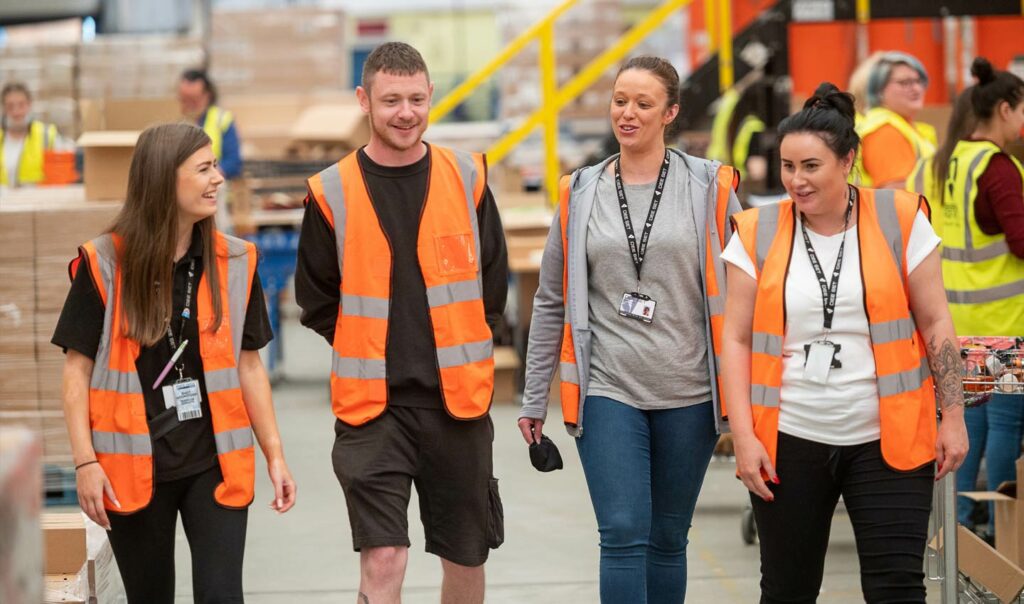
At Dee Set, we know that building a more sustainable business isn't something you can tick off a to-do list and forget about: it's an ongoing process.
That's why we've made social and environmental responsibility part of how we operate. Our responsibility commitments include reducing our environmental impact, improving waste management, and finding more sustainable approaches to packaging and distribution.
We've also achieved Zero Waste to Landfill certification, following the introduction of recycling and waste reduction programmes across our business. Dee Set has also earned an EcoVadis Silver Award, recognising our ongoing work to improve our environmental performance.
And sustainability doesn't stop at waste.
We're continually looking at ways to reduce energy consumption and promote more sustainable sourcing and production methods across our operations.
Want to find out more about Dee Set's approach to responsible business? Explore our sustainability and social responsibility commitments or get in touch to find out how we can support your retail operation.
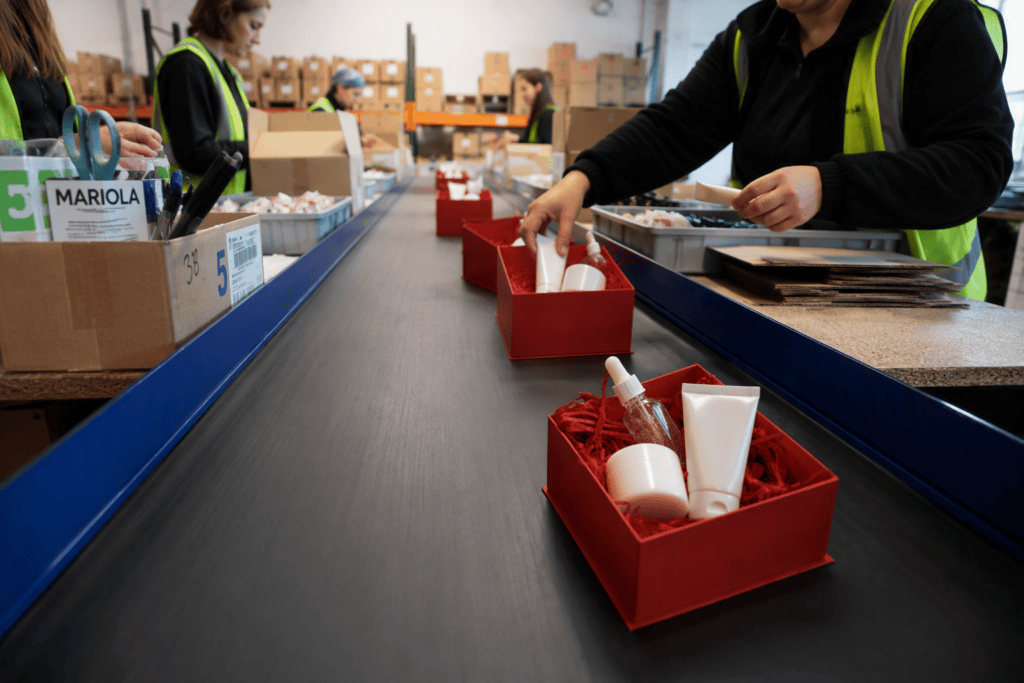
Today, gift sets and bundled products play a vital role across the retail calendar, helping brands drive value, introduce new products, increase basket spend and create memorable customer experiences.
From Christmas and Black Friday to Mother's Day, Father's Day, Valentine's Day, birthdays, baby gifting and wellness bundles, gifting has evolved into a year-round retail opportunity.
Whilst gifting presents benefits to different retail categories, in the beauty and fragrance market, gift sets continue to demonstrate their commercial value. According to Retail Week, gift sets at The Perfume Shop recorded a 4% year-on-year sales increase, while online demand for gift sets surged by 62% during peak trading periods and accounted for 16.8% of total sales.
Gifting offers consumers experience, curated collections and ready-made solutions that offer convenience and perceived value.
The challenge is bringing those experiences to life, particularly when seasonal demand begins to surge.
Why Gifting Programmes Are More Complex Than They Appear
A gift set sitting on a shelf may look simple. Behind the scenes, however, gifting programmes involve multiple moving parts.
Individual products need to be sourced and managed. Packaging must be produced. Promotional materials need to be coordinated. Retail specifications must be met. Security requirements considered. Displays assembled. Products distributed.
When demand spikes around seasonal events such as Christmas or Black Friday, the pressure compounds.
That's where the right operational partner can make a significant difference.
From Components to Retail-Ready: The Complete Gifting Journey
At Dee Set, we support brands throughout the entire gifting lifecycle.
Rather than treating gift set assembly as a standalone task, we provide end-to-end support that helps products move seamlessly from individual components to retail-ready execution.
Our integrated approach enables brands to simplify complex projects, reduce supplier fragmentation and scale more effectively during peak demand periods.
Whether you're launching a premium skincare gift set, assembling a limited-edition seasonal bundle or preparing a major retail gifting campaign, our teams can support every stage of the journey.
Kitting & Assembly Built for Scale
At the heart of every gifting project sits precise kitting and assembly.
Kitting and assembly involves grouping multiple individual products or components together to create a new stock keeping unit (SKU), transforming separate items into a complete retail-ready product.
Our specialist teams manage:
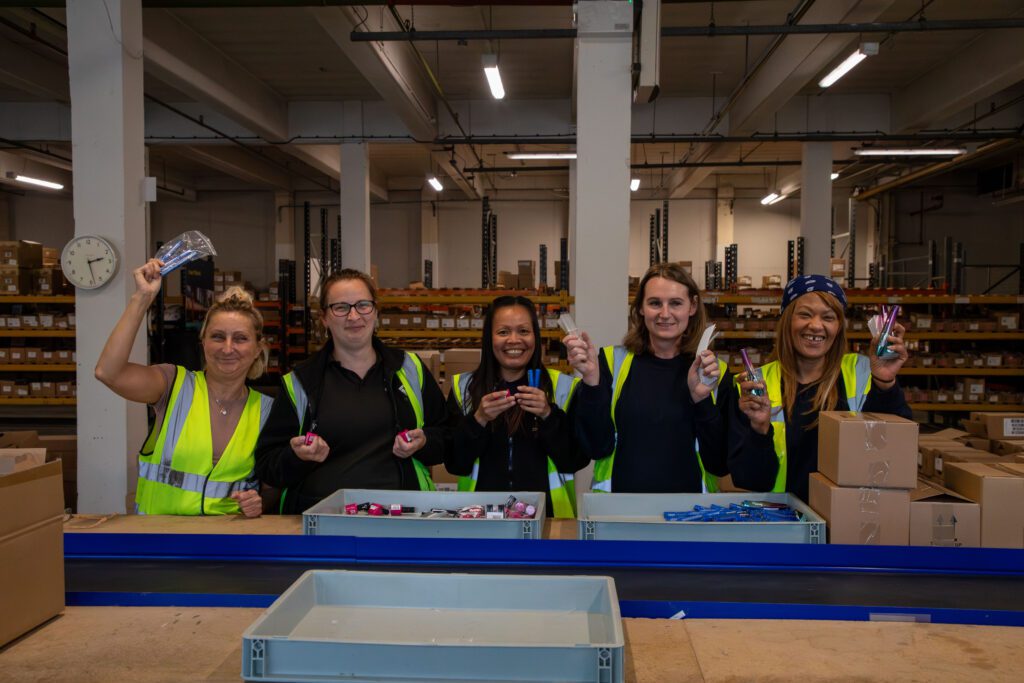
In 2025 alone, Dee Set assembled more than 300,000 gift sets, helping brands prepare for seasonal demand with flexible and scalable co-pack solutions.
Our experience spans projects of varying complexity, from simple promotional bundles through to large-scale gifting programmes requiring significant warehouse, assembly and distribution support.
And when demand increases, our infrastructure allows us to scale accordingly.
For one major gifting project, our teams successfully managed:
All supported by coordinated logistics and retail delivery programmes.
While every project is different, the principle remains the same: helping brands deliver gifting campaigns at scale without compromising on quality or efficiency.
More Than Gift Set Assembly
Many brands come to us looking for gift set assembly. What they often discover is a much broader range of support.
Because successful gifting campaigns require more than simply placing products into a box.
POS Design & Print
A great gift set deserves equally strong retail execution.
Our POS design and print capabilities help create eye-catching displays that attract shoppers and enhance product visibility in-store.
Whether it's temporary promotional material or a major seasonal campaign, we can support the entire process from concept through to fulfilment.
End-to-End FSDU Solutions
Free Standing Display Units remain one of the most effective tools for driving visibility during seasonal campaigns.
We support brands with:
Helping ensure products reach stores ready to make an impact.
Product Rework
Markets change. Packaging changes.Retail requirements change.
Our rework services help brands respond quickly with:
Helping prevent unnecessary waste while getting products back into circulation quickly.
Security Protection
Particularly important for high-value beauty and personal care products, our security tagging services help brands protect products without compromising presentation.
Why Brands Choose Dee Set
There are many businesses capable of assembling a gift set.
What makes Dee Set different is the breadth of support available across the entire retail journey.
Retail Expertise
Our heritage is rooted in retail.
That means we understand what happens after products leave the warehouse and arrive in-store.
We're not simply focused on assembly. We're focused on helping products perform.
Flexibility
Every gifting programme is different.
Some require thousands of units.
Others require hundreds of thousands.
Our flexible approach allows us to adapt to changing forecasts, seasonal demand and evolving customer requirements.
Proven Capacity
Our facilities and operational capabilities allow us to manage high-volume projects efficiently while maintaining quality and accuracy.
End-to-End Support
Rather than coordinating multiple suppliers, brands can leverage a single partner capable of managing:
Peak Season Starts Long Before Christmas
One of the biggest misconceptions about gifting is that seasonal success begins when products reach shelves.
The reality is quite different.
Peak season starts months earlier.
The brands that perform best during Christmas, Black Friday and other key retail moments are often those that have invested in planning, execution and operational readiness long before shoppers begin purchasing.
From initial assembly through to retail-ready delivery, every stage matters.
And as consumer demand continues to evolve, brands need partners capable of scaling quickly, reacting to changing forecasts and delivering consistently under pressure.
Ready to Bring Your Next Gifting Campaign to Life?
Whether you're planning a Christmas gifting programme, launching a beauty bundle, preparing a retail display campaign or looking for support with large-scale assembly and fulfilment, Dee Set can help.
From individual components to retail-ready execution, we provide the expertise, infrastructure and flexibility brands need to succeed in gifting.
Let's talk gifting.
Customers today don’t think in terms of “online” and “in-store” – they just want to shop. Whether they’re scrolling on the sofa, browsing in town, or tapping through a social media post, they expect every experience to feel connected.
That’s where omnichannel retailing comes in.
In this guide, we’ll explain what omnichannel retailing is, why it matters, and the trends shaping the future of retail.
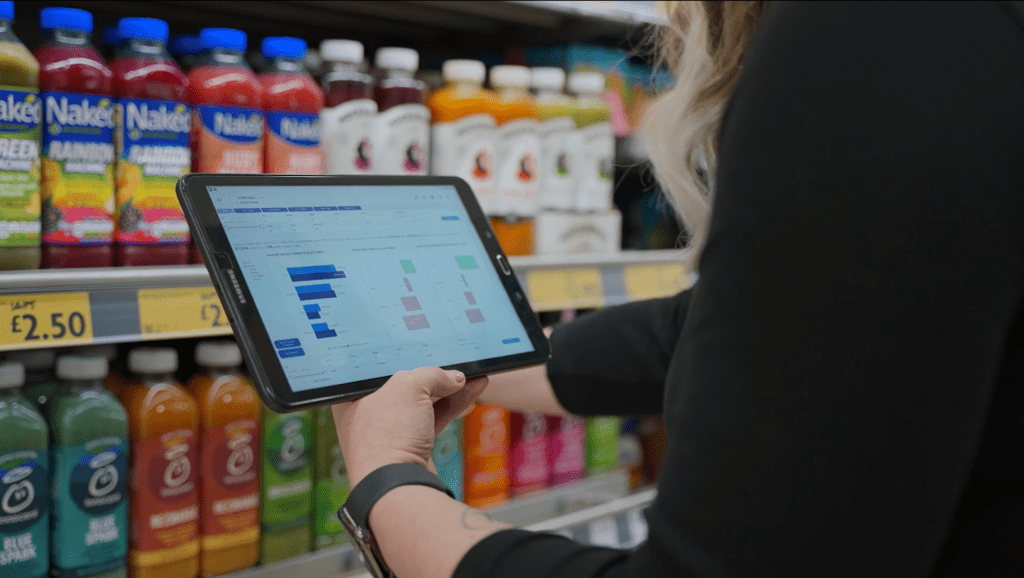
Omnichannel retailing is a way of selling that connects every shopping channel into one joined-up experience.
That means your website, physical stores, marketplace listings, social media, customer service, and inventory systems all work together instead of operating separately. That level of visibility usually starts with good retail merchandising and reliable retail data, so every channel is working from the same information.
Think of it like an orchestra. Every instrument has a different role, but they're all following the same sheet music. If one section misses a beat, everyone notices.
Retail works the same way.
For example, a customer might:
To the customer, it feels like one shopping journey. But behind the scenes, multiple systems have quietly worked together to make it happen.
The two terms often get mixed up, but they’re not the same thing.
Think of it like booking a holiday.
A multichannel experience is like booking your flights, hotel, and car hire through three different websites. It works, but you have to keep track of everything yourself.
An omnichannel experience is more like using one travel app that keeps every booking in the same place.
The end goal is simple: remove friction for customers and make life easier for retail teams too.
Customers expect convenience. If they can’t find accurate stock information, move between channels, or get help when they need it, they’re likely to shop elsewhere.
Research shows that companies with strong omnichannel engagement strategies retain an average of 89% of their customers, compared to a 33% retention rate for companies with weak cross-channel integration (Invesp).
That’s because omnichannel retailing helps businesses:
The best omnichannel experiences feel effortless.
When it works well, customers barely notice the technology behind it. They just notice that shopping feels easier.
Behind the scenes, though, there's plenty going on. Experienced field marketing teams and merchandisers are often the people making sure products are available, displays are compliant and promotions launch exactly when they should.
Building an omnichannel business takes time, but there are a few foundations every retailer should focus on:
Walk through every stage of the buying experience.
Looking at the entire journey often highlights gaps that individual teams don’t see.
Disconnected systems create disconnected experiences. If your website thinks an item is in stock but your warehouse disagrees, somebody’s going to be disappointed.
Getting inventory, customer data, and order management talking to each other helps everyone stay on the same page. Combining those systems with retail data and analytics gives retailers a much clearer picture of what's happening in every store, rather than relying on yesterday's reports.
Few things annoy customers more than travelling to a store for something that’s already sold out. Real-time inventory visibility helps customers shop with confidence while helping staff make better decisions.
Yes, technology matters when it comes to creating an omnichannel retail strategy. But your people matter more.
Store colleagues, merchandisers, and customer service teams all need access to the same information if they’re going to deliver a consistent experience.
After all, even the smartest systems can’t replace a helpful conversation.
Omnichannel strategies are constantly evolving. Here are some of the biggest trends shaping omnichannel retailing today:
Personalisation has moved beyond simply recommending similar products. Retailers are increasingly using AI to predict demand, tailor promotions, and help customers find products faster.
Think of it like having a sat nav instead of unfolding an old paper map. Both get you there, but only one adapts as the journey changes.
According to Shopify, AI-powered product recommendations, predictive analytics, and personalised shopping journeys are becoming central to omnichannel retail strategies as retailers look to improve customer experience and operational efficiency.
Many retailers still rely on separate platforms for stores, ecommerce, and inventory – but that’s changing.
According to Insider One, unified commerce is one of the biggest retail trends right now, with businesses increasingly replacing disconnected systems with a single platform for inventory, customer data, and fulfilment. It means fewer manual workarounds and fewer "that system doesn't talk to this one" conversations.
Click and collect is no longer a nice extra. For many shoppers, it’s become part of everyday life.
It combines the convenience of online shopping with the speed of visiting a local store, while giving retailers another opportunity to engage customers once they’re through the door.
Shoppers increasingly value flexible fulfilment options, particularly during busy shopping periods, with convenience remaining one of the biggest drivers of purchase decisions.
As third-party cookies disappear, retailers are placing greater emphasis on information customers choose to share directly. Loyalty programmes, purchase history and customer preferences all help businesses deliver more relevant experiences without relying on external tracking.
Insider One highlights first-party data strategies as a major focus for retailers looking to improve personalisation while adapting to changing privacy regulations.
The better retailers understand their customers, the easier it becomes to offer products they'll genuinely find useful.
Customers increasingly discover products while scrolling social media rather than actively searching for them. Instead of seeing a product, opening another app and searching again, they can often buy it there and then.
Shopify predicts social commerce will continue to become an increasingly important part of omnichannel retail as shopping journeys span multiple digital touchpoints.
For retailers, that means social channels are becoming another important piece of the omnichannel puzzle rather than simply a marketing platform.

When customers can move easily between online and in-store shopping, everyone benefits. Shopping becomes simpler, stock becomes more accurate and retail teams spend less time fixing avoidable problems.
Getting there takes planning, the right technology and joined-up operations.
That's where Dee Set can help.
Whether you need retail merchandising, field marketing, actionable data, or end-to-end fulfilment services, we help brands connect every stage of the customer journey.
Want to find out more about how we can help you with seamless omnichannel retailing? Get in touch today.
In retail, physical stock is a bit like milk: look after it, and it keeps your business moving… leave it sitting around too long, and it turns sour realllll fast.
Managing inventory across the UK supply chain is a constant balancing act. Between unpredictable shoppers, strict retailer rules, and tight delivery slots, poor stock control causes non-stop headaches. Before you know it, you’re dealing with missing stock, empty shelves, and cash tied up in warehouse boxes.
What is stock control in retail?
Stock control (or inventory control) is the day-to-day work of tracking and managing the physical stock you already have. It makes sure the right product is in the right place at the right time. This keeps items on shelves without turning your warehouse into an overpacked storage room.
People often mix up stock control and stock management, but in a smooth retail operation, they do two different jobs:
Get both right, and you can sell across major UK retailers without getting bogged down by lost stock or trapped cash. In this guide, we’ll cover practical stock control methods, how to fix common warehouse headaches, and when it makes sense to work with a tech-led warehouse and order fulfilment partner.
These two terms get swapped around all the time, but they aren't the same thing.
| Stock control | Stock management |
| Day-to-day operations | Long-term strategy |
| Focuses on physical movement and accuracy | Focuses on forecasting and planning |
| Tracks what's on the shelves right now | Predicts what you'll need next month |
| Handles real, physical boxes | Handles the wider supply chain |
| Answers: "What do we have in stock today?" | Answers: "What should we order for next season?" |
It might help to think of it like this:
You need both. But if your daily stock control is messy, even the best long-term plan won't save you.
You don't need to overcomplicate things. These five simple methods make up the backbone of solid inventory control.
Not every product deserves the same amount of your time. Grouping your inventory helps you focus on what actually matters:
By keeping a close eye on your 'A' items first, you protect the products that keep your business running.
JIT means ordering stock so it arrives right when you need it, not months before. Done right, it saves warehouse space and keeps your cash free. Done wrong (for example, if a delivery truck gets stuck in traffic), you end up with empty shelves and angry retail managers.
It works best if your suppliers are 100% reliable and your sales data is updated live.
Essential for anything with an expiry date, beauty products, or seasonal items. FIFO simply means selling your oldest stock first. It stops products from sitting at the back of a shelf for months, preventing waste.
EOQ is just a quick maths check to work out the ideal order size.
EOQ helps you find the sweet spot right in the middle.
Because lorries break down, demand suddenly jumps, and unexpected delays happen.
Here is a straightforward way to calculate your backup stock:
This gives you a sensible cushion so you don't run out, without turning your warehouse into a maze of spare boxes.
Even well-run warehouses hit bumps in the road. Here are four issues that pop up most often and how to sort them out.
This is stock that your computer system says you have… but when you go to pick it up, the shelf is completely empty.
Items that get broken, misplaced, or lost somewhere between delivery and the checkout.
Your stock control plan falls apart fast if deliveries turn up two weeks late.
Trying to sell across supermarket stores, your own website, and online marketplaces all at once can get messy very quickly.
Let’s be honest: nobody keeps 100% accurate stock records using pen and paper.
The retail brands that run smoothly have swapped paper clipboards and messy spreadsheets for smart technology. Here is what that looks like in practice:
The result? You always know exactly where your stock is, meaning no more frantic searches for lost pallets.
As your business grows, you have to decide: do you lease a bigger building yourself, or work with someone who already has one?
It’s usually time to look at an outsourced 3PL warehouse setup if:
If your current stock setup feels messy or stressful, you're not the only one. Modern retail moves fast, and keeping up takes good data, clear systems, and room to grow.
That’s where having a practical partner makes life a whole lot easier.
With 180,000 sq ft of warehouse space in Stoke-on-Trent, 6,000 pallet spaces, 50,000 pick locations, and a team looking after over £24 million in stock, Dee Set knows how to keep inventory moving smoothly. We pair big warehouse capacity with smart tech tools to give you total visibility from the store shelf right back to the warehouse floor.
Whether you're tired of running out of stock, dealing with damaged goods, or trying to scale up your eCommerce and retail order fulfilment, getting your stock control right is the first step.
Want to chat about your stock setup?
Get in touch with the Dee Set team today to see how our warehousing and fulfilment services can take the hassle out of your inventory.
Ever clicked ‘buy now’ only to be told you’ve got to wait several months for your item to ship? That, right there, is a backorder in action. Not quite out of stock, not quite available, but somewhere in the middle, causing just enough confusion to keep customer service teams busy.
Managing stock fluctuations is a core part of modern retail logistics. If you’re looking to streamline your supply chain or explore dedicated retail fulfilment services, understanding how stockouts impact your bottom line is the first step.
And if you’ve been wondering what a backorder is, you’re in the right place. Let’s break it down, without the jargon.
A backorder happens when a product is temporarily out of stock but still available to purchase. Instead of stopping sales altogether, the retailer allows customers to place orders with the understanding that the item will be shipped later, once inventory is replenished.
This is different from a product being completely unavailable. With a backorder, there’s an expectation that stock is already on its way or will be produced shortly.
Here’s how it typically works:
It sounds straightforward, but behind the scenes, it relies massively on accurate forecasting, supplier coordination, and tight inventory control. If any of those slip, delays start to stack up quickly.
Backorders aren’t random. They usually point to something happening within the supply chain or demand patterns.
The most common causes are:
Sometimes products just take off. A viral moment, seasonal surge, or successful promotion can drive demand far beyond forecasts.
While that’s great for sales, it can quickly drain stock levels. If replenishment can’t keep up, backorders follow.
Forecasting demand is part science, part educated guess. If predictions are off, even slightly, businesses can end up understocked.
This is especially common with:
Delays from suppliers, shipping issues, or manufacturing hold-ups can all slow down stock replenishment.
Common culprits include:
Even a small delay can ripple through the entire supply chain.
Sometimes, the stock should be there… but isn’t.
Poor inventory visibility, system errors, or miscounts can create ‘phantom stock’, where systems show availability but shelves are empty.
When reality catches up, backorders appear.
Retail loves a peak season. Warehouses… not always so much. Events like Black Friday, Christmas, or summer sales can put huge pressure on stock levels. If inventory planning doesn’t fully account for these spikes, backorders are pretty much inevitable.
Not always. In fact, backorders can be both good and bad for a business, depending on how they’re managed.
Allowing backorders means you don’t have to lose a sale just because stock isn’t immediately available.
Benefits include:
For high-demand items, backorders can even signal popularity and drive further interest.
Of course, there’s a flip side.
If backorders aren’t handled well, they can lead to:
Customers are generally happy to wait, as long as expectations are clear. When it’s not clear from the get-go that the item won’t be shipped straight away, that’s when problems start.
Backorders don’t just affect customers. They can create ripple effects across your entire operation.
Managing backorders adds an extra layer to order processing. Teams need to track pending orders, prioritise shipments, and ensure nothing slips through the cracks once stock arrives.
When new stock lands, there’s often a rush to clear backlogged orders. That can put pressure on picking and packing teams, making flexible third-party warehousing solutions critical during peak trading periods.
Clear communication is essential. Customers need to know:
Trust can quickly erode without this.
Backorders highlight the importance of accurate, real-time inventory data. Without it, businesses risk overselling or underestimating demand.
You might not be able to eliminate backorders entirely, but you can definitely reduce how often they happen and how disruptive they are.
Better data leads to better decisions. Use historical sales data, seasonal trends, and real-time insights to refine your forecasts. The more accurate your predictions, the less likely you are to run into stock shortages.
Reliable suppliers make a huge difference. Clear communication, agreed lead times, and contingency planning can help minimise delays. It’s also worth considering multiple suppliers for key products to reduce risk.
Knowing exactly what stock you have, and where it is, is essential. Modern inventory systems and integrated platforms can help eliminate discrepancies and give you a clearer picture of stock levels across warehouses and channels.
Transparency goes a long way. If a product is on backorder, make it obvious.
Customers are far more understanding when they know what’s happening.
Efficient fulfilment processes help you respond faster when stock arrives. This is where having the right operational setup really matters.
Streamlined warehousing, organised picking systems, and scalable fulfilment operations can make clearing backorders far less stressful.
Handled well, backorders don’t have to be a problem. In fact, they can actually be a sign of strong demand and a growing business.
When you combine accurate data, strong supply chain coordination, and efficient fulfilment, you move from reacting to backorders to managing them proactively.
That’s where having the right partner can make all the difference.
At Dee Set, we help retailers take control of their supply chains with end-to-end fulfilment and warehousing solutions designed for real-world retail challenges. From improving stock visibility to streamlining order processing, we make sure your operations stay one step ahead, even when demand spikes.
Get in touch with the Dee Set team today to optimise your retail fulfilment.
Not quite. A pre-order is placed before a product is released, while a backorder happens when an existing product is temporarily out of stock.
It depends on the supply chain. Some are resolved in days, others can take weeks. Clear timelines are key to managing expectations.
It depends on your operations. If you can reliably fulfil orders within a reasonable timeframe and communicate clearly, backorders can help capture additional sales.
Not always. But with strong forecasting, better inventory management, and efficient fulfilment processes, they can be significantly reduced.