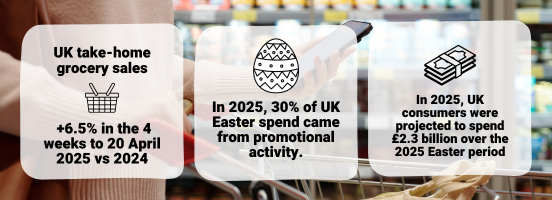
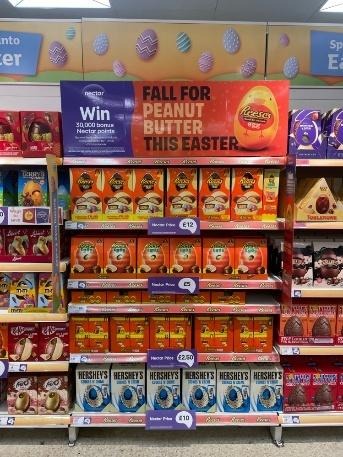
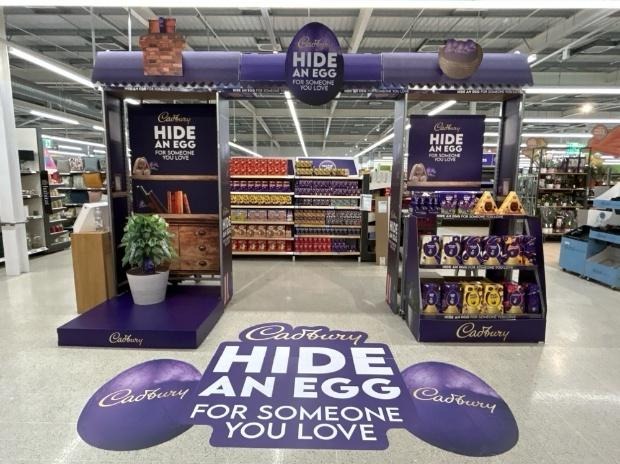
Easter is and has always been a major seasonal period for grocery sales in the UK and Ireland, with shoppers driving huge spikes in confectionery, food, and drink purchases. But behind the obvious seasonal boom lies a complex landscape: evolving consumer habits, cost pressures, and fierce competition. Understanding these trends is essential for brands looking to capture growth and stay profitable. Let’s take a look at the Easter shopping insights and retail trends shaping 2026. Take-home grocery sales in the UK grew 6.5% over the four weeks to 20 April 2025 compared with 2024, according to Kantar. This growth was driven by Easter falling later in April and increased seasonal purchases. Chocolate remained a key driver, but with price pressures: the price of chocolate in the UK rose 16.5% in the year to March 2025, significantly outpacing overall supermarket food & drink inflation (~4.4%). Rising cocoa costs were the main contributor to this rapid inflation. Despite this, Easter eggs still saw 11% growth, highlighting that shoppers remain willing to indulge during seasonal occasions. In Ireland, take-home sales rose 8.4%, with an extra €15.3m spent on seasonal confectionery, 82% of which went on Easter eggs. Promotions also had a major impact, with 30% of UK Easter spend coming from promotional activity. What can brands take away from this? While inflation is a real pressure, consumers’ seasonal habits, including buying earlier in advance of Easter, provide opportunities for brands to capture demand and manage stock effectively. It’s important to be aware of the sales figures when understanding Easter shopping trends, but to optimise your in-store strategy, what you really need to think about is why and how consumers buy. Here’s what’s shaping Easter 2026: With Easter 2026 falling earlier in the calendar, shoppers are starting their purchases sooner, spreading demand across multiple weeks. Online and offline channels are both crucial: consumers may browse online for inspiration or click-and-collect, but often complete purchases in-store. Brands need to ensure visibility across all touchpoints to meet shoppers wherever they choose to buy. Premium own-label products grew 23.2% during Easter 2025, showing that consumers are willing to trade up for higher-quality offerings. Brands that emphasise ingredient quality, innovation, and packaging can differentiate themselves and justify premium positioning. Health-conscious choices are reshaping seasonal purchases. Nearly 29% of shoppers reduced Easter egg consumption due to health concerns, driving growth in free-from, vegan, and plant-based alternatives. Brands innovating with allergen-free or low-sugar options, such as Moo Free and NOMO, are better positioned to meet these demands. Consumers increasingly expect recyclable packaging, ethical sourcing, and carbon-conscious products. While these initiatives add costs, they also strengthen loyalty and improve brand perception. Of course, Easter doesn’t come without its hurdles. The key operational and strategic challenges brands and retailers face include: Execution and support are crucial to turn insights into action. At Dee Set, we help brands take those all-important insights and actually make them happen on the shop floor. Here’s how we do it: Our syndicated and dedicated merchandising teams manage shelf-space on behalf of brands, reducing retailer overhead while ensuring products are always front and centre. Through late-stage customisation and co-packing, we deliver “retail-ready” displays that require no in-store assembly, helping brands bypass warehouse bottlenecks and reduce operational costs. Using Agentic AI, our teams move beyond analytics to actionable data, identifying where margin leaks occur and executing targeted actions. By 2026, it is predicted that 40% of retail interactions will be AI-driven, providing more precise, timely decisions. Eye-catching Free-Standing Display Units (FSDUs) and strategic in-store execution capture attention, drive impulse purchases, and reinforce marketing campaigns. We assemble and maintain displays efficiently, ensuring brand standards across channels. From monitoring execution to addressing on-shelf issues in real time, our field marketing teams ensure optimal product placement, stock availability, and shopper engagement, protecting margins and driving sales. Easter 2026 presents a unique blend of opportunity and complexity. With early shopping, multichannel behaviour, rising chocolate prices, and premiumisation trends, brands must be strategic, data-informed, and execution-focused. By combining market insights, operational excellence, and targeted support, brands can not only meet shopper expectations but also turn seasonal challenges into profitable growth. Understanding trends, mitigating risks, and ensuring flawless in-store execution are the keys to maximising Easter performance now and in the years ahead. Easter success doesn’t happen by chance, it happens by design. With rising cocoa costs, earlier shopping patterns, and increasing channel fragmentation, brands need more than isolated services. They need a partner who can connect every stage of the value chain. Under the umbrella of Acosta Europe, Dee Set offers a uniquely integrated suite of services – from insight and analytics to retail media, co-packing, merchandising, and feet-on-the-ground execution. This rare, fully connected approach enables us to act as a true end-to-end growth partner, reducing complexity while protecting margin.Contact us to discover how our one-stop model can drive smarter, more profitable seasonal performance.
Last year, Easter market performance remained strong despite inflation
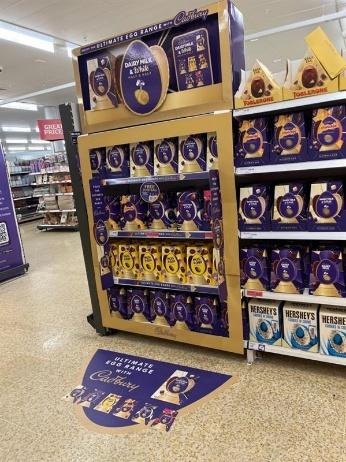
Easter consumer insights: What do shoppers want?
1. Early shopping and multichannel behaviour
2. Premiumisation and own-label growth
3. Health and wellness priorities
4. Sustainability and ethical sourcing
What key challenges do brands and retailers face during Easter?
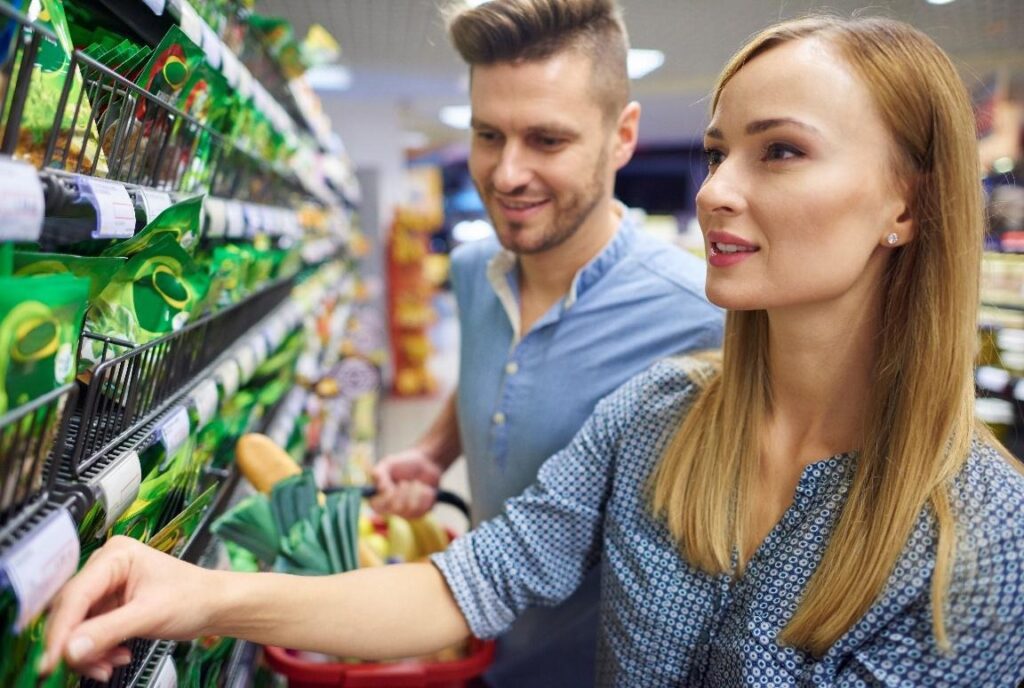
How can brands and retailers make Easter shopping insights work in their favour?
1. Reducing cost-to-serve
2. Agile co-packing and supply chain solutions
3. Data-driven execution
4. Stand-out in-store visibility
5. Feet-on-the-ground support
Final thoughts